



Home/Christmas Light Installation
November – January · Boston
Christmas light installation for Boston houses
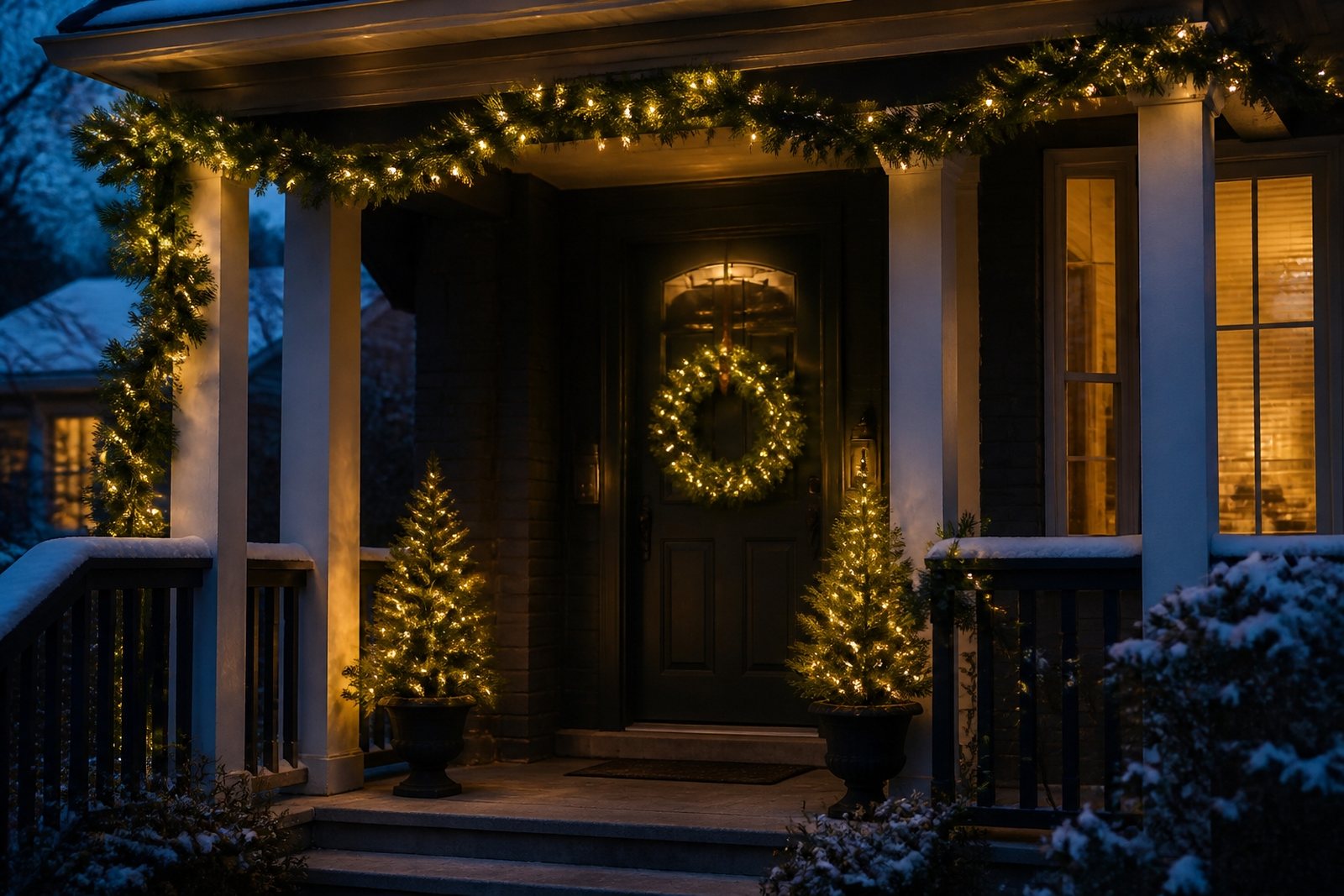
We design the layout, hang the lights, come back when a strand fails, take everything down in January and store it until next year. You never open the ladder.


Local guide · Christmas installs
Holiday Decoration Rules and Fire Code in Boston
Residential roofline lights and yard décor are different from decorations placed in assembly spaces, shared building lobbies, storefronts, or event venues. For public-facing spaces, keep exits and egress routes clear, avoid open flames and candles in decorative arrangements, and use flame-resistant décor where required; consult Massachusetts fire-safety information when a display is part of a public gathering or occupied common area.
| DISPLAY TYPE | PRACTICAL REQUIREMENT |
|---|---|
| Private house exterior | Keep decorations secure, away from heat sources, and off walking routes. |
| Shared lobby or assembly area | Maintain clear exits and use appropriate flame-resistant decorations. |
| Candles or open flame | Use electric alternatives for wreaths, windows, and greenery. |
- Historic façades: Properties in Beacon Hill, Bay Village, Back Bay, and the South End may need Boston historic district design review before visible exterior attachments become a permanent change.
- Seasonal scope: Clips and removable fasteners are preferable to drilling into brick, slate, trim, or copper details for a short-term display.
Temporary Wiring, Cords and GFCI Requirements for Holiday Displays in Boston
Outdoor decorative lighting should run from protected exterior power, using listed equipment rated for its location and cords sized for the connected load. The current Massachusetts Electrical Code is based on the 2026 National Electrical Code and applies when new or altered wiring is part of the project.
- GFCI protection: Exterior receptacles need ground-fault protection; a tripping device is a warning to investigate moisture, damaged equipment, or an overloaded connection.
- Weather exposure: Keep plug connections elevated and protected from standing water, snowbanks, and roof runoff.
- Cord management: Do not daisy-chain extension cords, run indoor-rated leads outdoors, or cross a front walk with an unprotected cord.
- Permanent conversion: A display that requires new outlets, concealed wiring, or altered circuits is electrical work; Boston electrical permit requirements and fees require a licensed contractor to apply and complete that work.
Falls From Ladders and Roofs: What the Data Says
Holiday installation combines ladders, wet leaves, early ice, narrow side yards, and roof edges; the Consumer Product Safety Commission identifies holiday decorating as a source of emergency-department injuries, with falls a central hazard. Use the Consumer Product Safety Commission holiday decorating safety guidance as a baseline for planning before anyone climbs.
- Footing first: Ladder feet need stable, level ground rather than a sloped brick walk, icy driveway, or loose planting bed.
- Roof planning: Dormers, steep slate, snow-shedding edges, and ice-dam areas call for ground-based access or planned professional access rather than improvised roof walking.
- Installation method: Crews should use correct ladder placement, a spotter when needed, and attachment methods that avoid reaching sideways from a ladder.
- Property exposure: Confirm that any installer working above grade carries appropriate insurance before work begins.
Displays Over Sidewalks and in Public Spaces: What Needs a Permit in Boston
A display becomes a public-way issue when a lift, ladder staging area, fence, planter, cord, or decoration restricts street or sidewalk access. Boston Street Occupancy Permit requirements apply to temporary restrictions of a street or sidewalk, and applications are due at least seven business days before public space is needed.
| CONDITION | WHAT TO PLAN FOR |
|---|---|
| Lift or staging on sidewalk | Street Occupancy Permit, work scope, duration, traffic plan, and pedestrian access. |
| Sidewalk obstruction | ADA-compliant pedestrian detour when the route is obstructed or closed. |
| Park or public event display | Venue approval and a detailed site plan under Boston outdoor public-event permitting guidance. |
- Do not narrow the route: A barrier, planter, extension cord, or ladder base that constricts pedestrian movement is an access problem.
- Overhead décor: Keep displays on private property unless the required public-space approvals are in place.
1 City Hall Square, Room 714
Boston, MA 02201-2024
Phone: 617-635-4900
Official Website
Public Works - Permitting
1 City Hall Square, Room 715
Boston, MA 02201
Phone: 617-635-4911
Official Website
Neighborhoods we serve in Boston
Our installation planning follows the real access conditions of Boston homes, from narrow historic streets to wider outer-neighborhood lots.
- Beacon Hill: Historic brick façades, tight streets, and prominent rooflines favor carefully placed removable clips and compact access plans.
- Back Bay: Tall rowhouses and formal façades require ladder placement that respects busy sidewalks and detailed architectural trim.
- Bay Village: Brick rowhouse settings call for low-impact attachment methods that avoid masonry drilling for seasonal lights.
- South End: Townhouse stoops, ironwork, and closely spaced façades benefit from clean roofline layouts and concealed cord routes.
- Charlestown: Varied roof heights, narrow side access, and dense residential blocks make pre-install access planning important.
- Dorchester: Detached homes, multi-unit properties, porches, and larger front yards allow broader tree, railing, and roofline designs.
- Jamaica Plain: Mature tree cover and varied home styles call for careful branch lighting and protected ground connections.
- Hyde Park: More suburban lot patterns often provide practical driveway staging and room for larger yard displays.
Book a walkthrough
Send a photo of the front of the house.
That is usually enough to give you a real number and hold an install window. No obligation, no pressure to book on the call.